Guks Studio

I occasionally post my posters on social media, and a series always looks better when it moves. Turning a set of posters into a GIF or a short video was the annoying part. It meant plugins, and then resizing whatever came out for the platform it was going to.
So I turned the step I kept doing by hand into a small app. I export the posters from Figma, drop them into Guks Studio, pick where they’re going, and get a GIF or MP4 that’s ready to post.
how it works
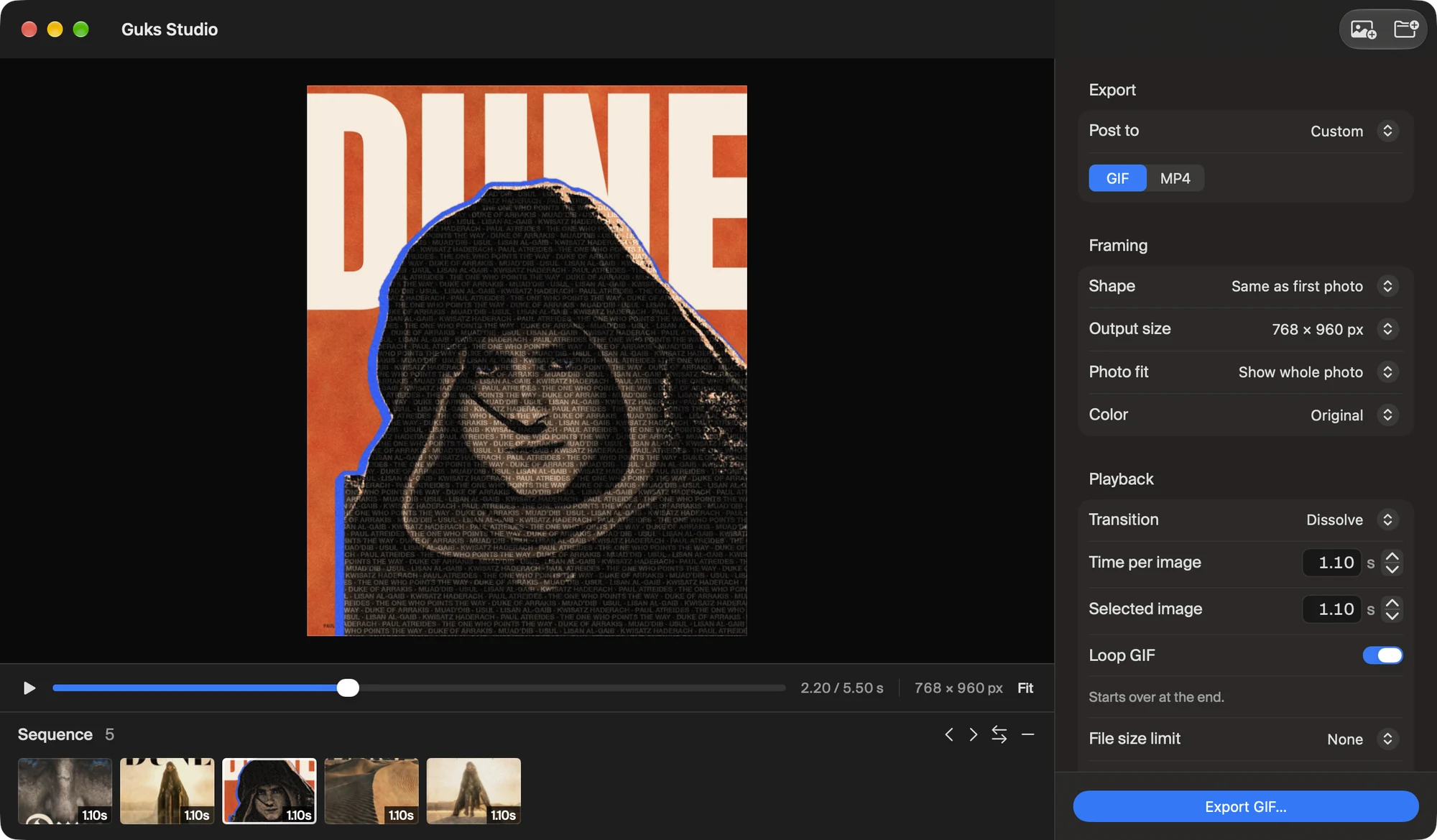
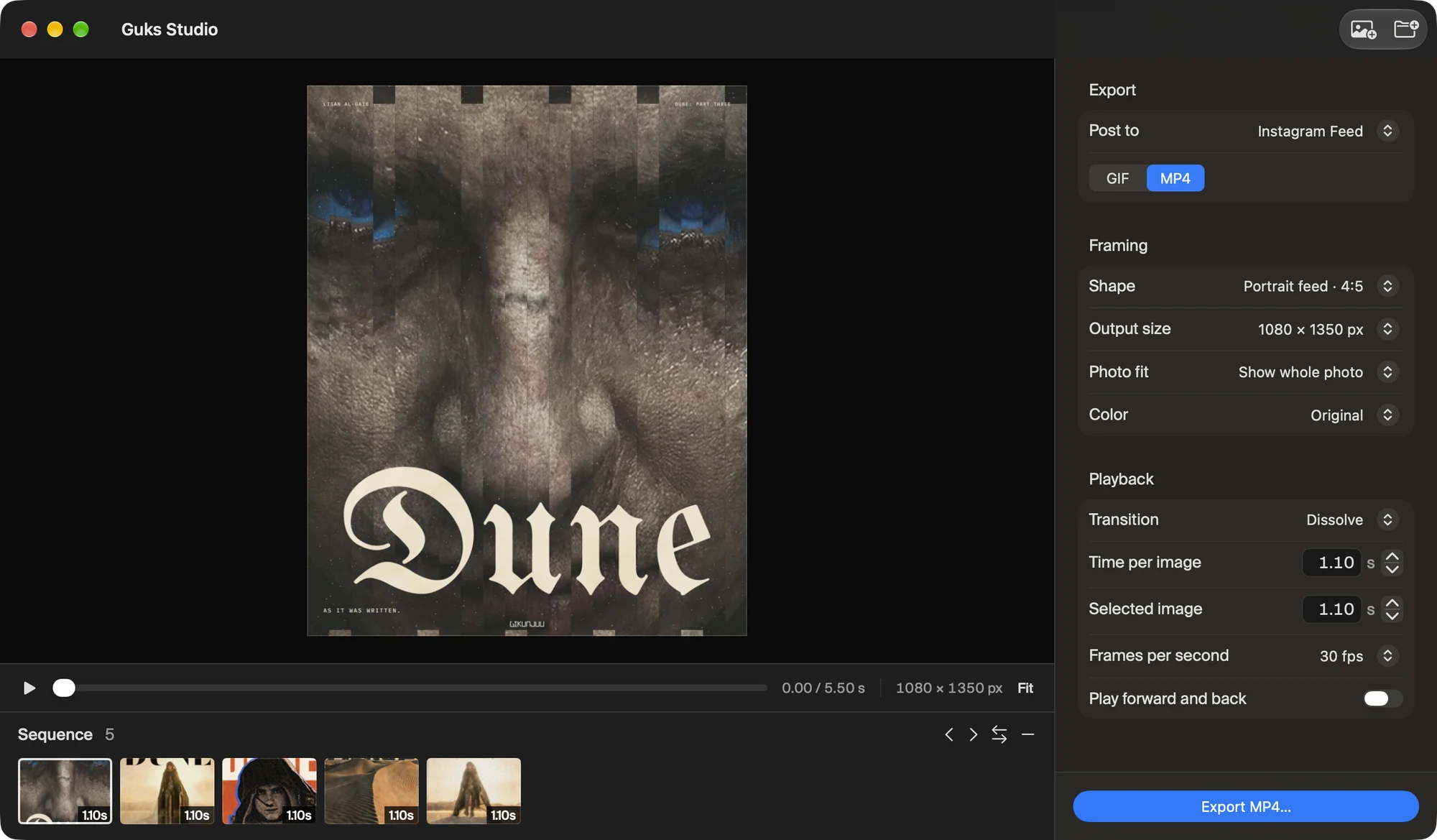
You drag in images or a whole folder and they line up as a sequence. You can reorder them by dragging, reverse the order, and give any single poster its own hold time when one needs to sit on screen longer.
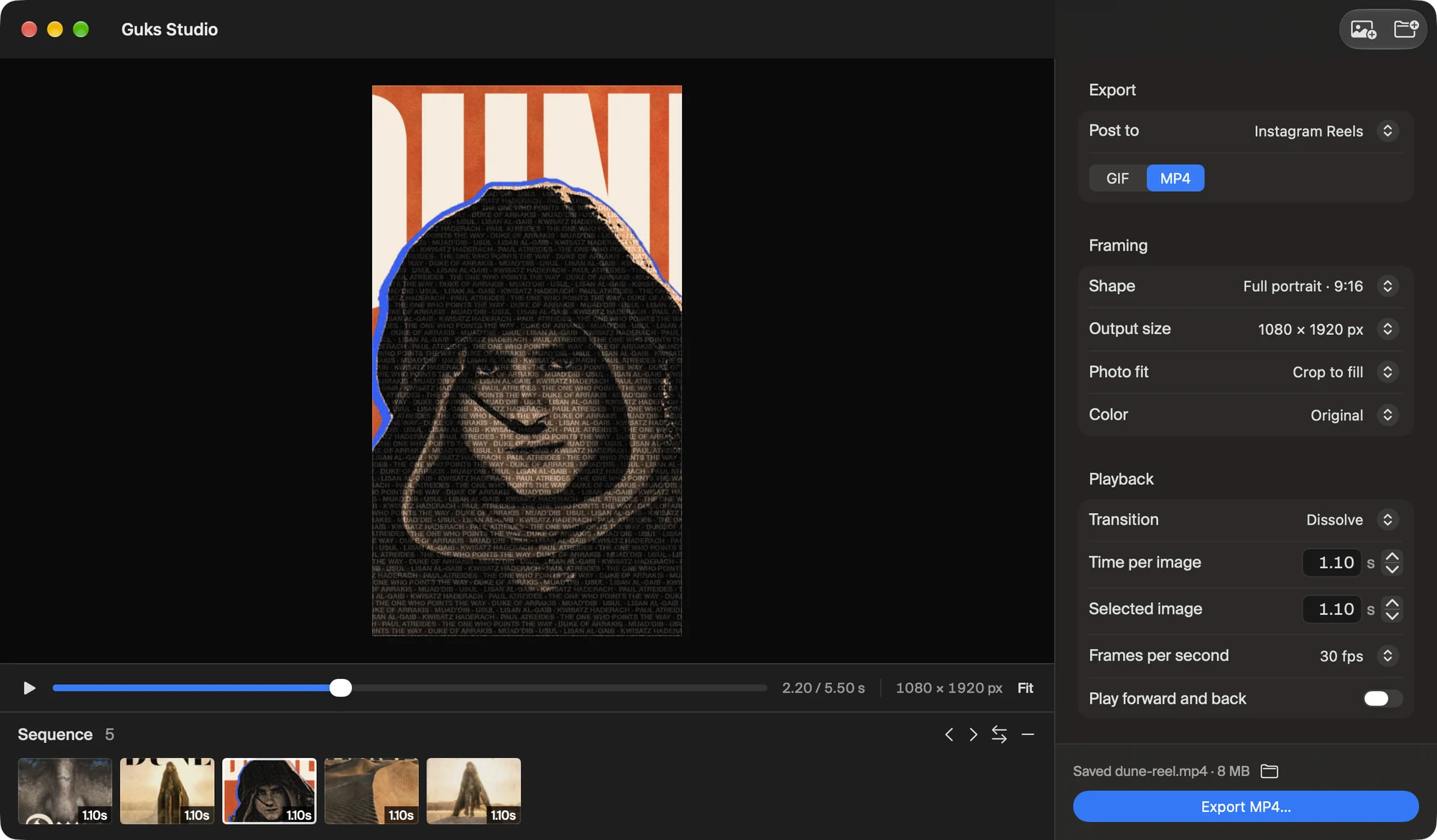
The preview plays the real timing and transitions, so what you watch is what you export. Dissolve, slide, zoom or a hard cut, with an option to play forward and back for a seamless loop.
what it does
- Presets for Instagram Feed and Reels, TikTok, YouTube Shorts, YouTube landscape and Twitter
- Picking a preset sets the format, shape and size, like a 4:5, 1080 × 1350 MP4 for the Instagram feed
- Twitter GIF presets keep the file under the upload limit, stepping the size down until it fits
- GIF or H.264 MP4, with frame rate, loop and output size when you want control
- Show the whole poster or crop to fill when the shape changes
- Original, black and white or warm colour, applied to the whole sequence
the stack
It’s a native macOS app in Swift and SwiftUI. GIFs are written with ImageIO, MP4s with AVFoundation, and the framing, colour and transitions are drawn with Core Image. No third party packages.
The interface is set in LOOP Grotesque, the typeface I built from my own Guks project. It runs on macOS 13 or later, on Apple silicon and Intel.
View on GitHub →